javaprivatetour.com – While volcanoes, beaches, and rolling hills attract travelers at first glance, it is the traditional houses of Flores that truly reveal the island’s soul. These structures are not simply shelters built from wood and thatch. They are symbols of ancestry, identity, and spiritual continuity.
Across the highlands and valleys of Flores, traditional houses stand proudly at the center of rural settlements. Whether you visit Wae Rebo in Manggarai, Bena in Ngada, or villages near Ende and Maumere, you will notice that architecture here carries deep meaning. Flores traditional houses are living connections between past and present. Understanding their ancestral meaning transforms your journey from sightseeing into cultural discovery.
The Symbolic Design of Flores Traditional Houses
In Flores, architecture is never random. The shape, orientation, and materials used in traditional houses reflect worldview and belief systems passed down through generations.
The vertical connection between worlds
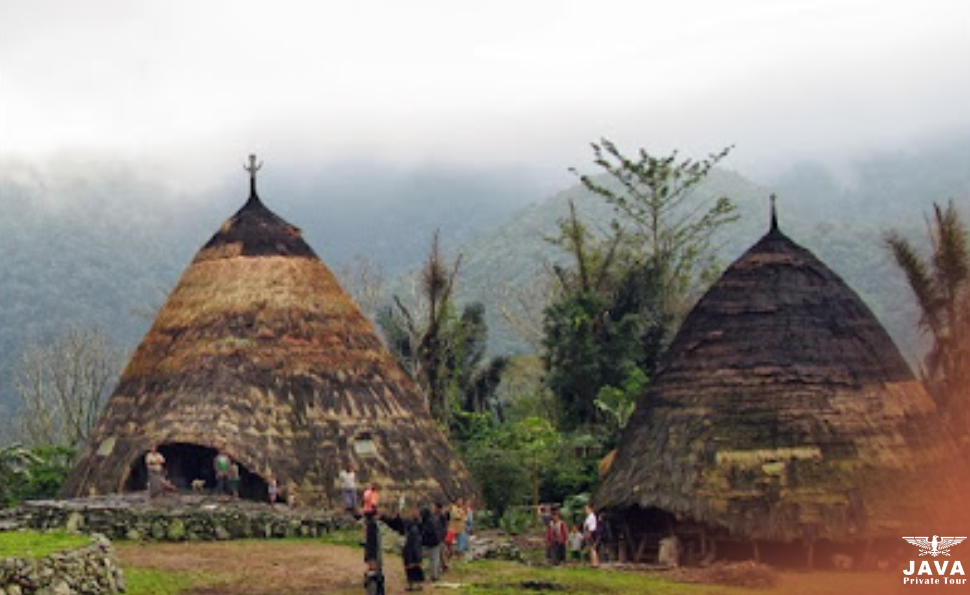
Many traditional houses in Flores are built with strong vertical symbolism. In villages such as Wae Rebo, the iconic conical houses rise dramatically toward the sky. The roof represents the upper world, often associated with ancestors and spiritual guardians. The middle section is the living space for the family. The lower section connects to the earth, symbolizing human existence and daily life.
This vertical structure expresses harmony between heaven, humanity, and nature. It reflects the belief that life must remain balanced across these dimensions. When you stand inside one of these houses, you are physically surrounded by this philosophy.
Materials rooted in the land
Traditional houses in Flores are built using local materials such as bamboo, wood, palm fiber, and grass thatch. These materials are not chosen only for practicality. They symbolize respect for nature and dependence on the surrounding environment.
Building a house is a communal activity. Villagers gather to cut timber, prepare roofing, and assemble the structure together. This shared effort strengthens bonds and ensures that the house is not just owned by a family but supported by the entire community.
The process of construction often includes rituals asking for ancestral blessing. Before wood is cut or foundations are laid, elders may lead prayers or offerings. This reinforces the idea that a house is both physical and spiritual space.
Ancestral Meaning in Village Layout and Sacred Spaces
Flores traditional houses do not stand alone. Their arrangement within the village reveals deeper layers of ancestral meaning.
Central courtyards and sacred stones
In villages such as Bena and Gurusina, houses face a central courtyard filled with megalithic stones or ceremonial structures. These stones often represent ancestors and clan lineage. Important rituals take place in this open space.
The placement of houses around this courtyard reinforces unity. Every family shares visual connection to the sacred center. This layout reminds villagers that individual lives are part of a larger ancestral network.
In Manggarai communities, traditional houses may align according to clan divisions. Each clan maintains its own house, but together they form a cohesive settlement. This organization ensures social order and respect for lineage hierarchy.
Houses as guardians of heritage
Inside many Flores traditional houses, you may see heirloom objects, woven textiles, ceremonial tools, or ancestral relics carefully stored. These items are not displayed as museum pieces. They are protected as living heritage.
During ceremonies such as weddings or funerals, these objects are brought out and used. The house becomes a stage for ancestral memory. Songs, chants, and rituals performed within its walls reinforce generational continuity.
Even when modern houses are built nearby, traditional structures remain central for ceremonial purposes. They act as anchors of identity in a rapidly changing world.
Regional Variations of Flores Traditional Houses
Flores is culturally diverse, and this diversity is reflected in architectural styles across the island.
Wae Rebo and the Mbaru Niang
The village of Wae Rebo is famous for its Mbaru Niang houses, tall conical structures that can accommodate multiple families. Their unique design protects against mountain winds and heavy rainfall. Beyond their practicality, these houses symbolize unity and collective living.
Entering a Mbaru Niang feels intimate and communal. The interior space is shared, reinforcing cooperation and interdependence. Visitors often describe a sense of warmth that goes beyond temperature.
Bena and Ngada architecture
In Ngada region, traditional houses feature steep thatched roofs and carved wooden details. Miniature roof structures often represent male and female symbols, expressing balance within society. The careful symmetry of houses facing the ceremonial courtyard demonstrates structured social harmony.
Eastern Flores variations
In eastern Flores, houses may incorporate different materials and roof shapes, yet the principle remains the same. Architecture reflects clan identity, spiritual belief, and relationship with land. While styles differ, ancestral meaning stays consistent.
Experiencing Flores Traditional Houses as a Visitor
When you visit traditional villages in Flores, approach them with respect and curiosity. These are not theme parks. They are living communities.
Respecting cultural space
Always ask permission before entering a house. Dress modestly, especially in villages with strong ceremonial traditions. If you are invited inside, accept with gratitude. Sitting quietly and observing is often the best way to learn.
Support local communities by purchasing handmade textiles or contributing to village maintenance funds. Your visit should benefit the people who preserve these traditions.
Understanding through guided travel
Without context, a visitor might see only wooden houses and stone courtyards. With explanation, you begin to understand ancestral symbolism, clan organization, and the spiritual layers embedded in architecture.
At Java Private Tour, we specialize in meaningful journeys that connect you deeply with Flores traditional houses and their ancestral meaning. We are not a generalist operator offering rushed itineraries. We are a specialist committed to cultural depth and responsible travel.
Our private tours allow time for storytelling, respectful interaction, and genuine learning. Whether you are visiting Wae Rebo after a scenic trek or exploring Ngada villages near Mount Inerie, we ensure that your experience is informative and personal.
Travelers often say that standing inside a traditional house in Flores changes their perception of home itself. They see how architecture can hold memory, protect heritage, and express identity.
Flores traditional houses are not frozen in the past. They continue to evolve while preserving ancestral foundations. They remind us that buildings can embody philosophy, that roofs can symbolize heaven, and that courtyards can unite generations.
If you truly want to understand Flores, begin with its houses. Listen to the stories within their walls. Observe the rituals in their courtyards. Feel the presence of ancestry carried through timber and thatch.
So, if you’re ready to explore the wonders of Flores traditional houses and ancestral meaning, head over to our REQUEST PAGE and let’s start planning your adventure. Or you can simply CLICK THIS LINK to chat with us on WhatsApp. With Java Private Tour, you’re not just getting a guide; you’re gaining a friend who will ensure your trip is nothing short of extraordinary. See you in Java!