
Java Heritage Walking Tour Tracing Great Families of Java
Walking Through History, Memory, and Identity
javaprivatetour.com – Java heritage walking tour is not about ticking landmarks off a list.
It is about slowing down and learning how cities were formed, how neighborhoods emerged, and how families — often unseen in official narratives — quietly shaped the island we know today.
Most travelers come to Java for volcanoes, temples, and landscapes. These are powerful, unforgettable experiences. But beneath those layers lies another Java — one built by merchants, industrialists, landowners, and community leaders whose influence still lingers in streets, buildings, and local memory.
This journey does not focus on palaces or monuments.
It focuses on people.
Java at the Heart of Global Trade
During the late nineteenth and early twentieth centuries, Java was one of the most economically significant islands in the world.
Sugar plantations supplied European markets. Coffee and tea from the highlands traveled across oceans. Quinine from West Java became a critical medicine used globally. Ports, railways, factories, and warehouses expanded rapidly to support this system.
This economic transformation did not happen in abstraction. It was driven by families — Chinese, Arab, European, and Javanese — who invested capital, organized labor, negotiated power, and built long-lasting commercial networks.
Many of these families operated across generations. Their businesses shaped where people lived, where roads were built, and how cities grew.
Semarang as a Case Study of Family Capital

Semarang stands as one of the clearest examples of how family enterprises shaped an entire city.
Sugar trading houses, shipping offices, and financial institutions clustered around the port. Warehouses expanded along canals. Residential districts developed close to commercial centers, forming the urban structure still visible today.
Walking through Semarang with historical context reveals how commerce dictated geography. Streets were not random. Neighborhoods were functional responses to economic needs.
This is why a Java heritage walking tour matters. Without understanding these layers, visitors see only old buildings. With context, they see a living economic map.
Pekalongan and the Industrial Roots of Batik

Pekalongan is often introduced simply as a batik town.
In reality, it was a complex industrial hub. Batik production involved capital investment, labor organization, raw material supply chains, and export networks. Families played a central role in managing these systems.
Entire neighborhoods grew around workshops and trading houses. Social relationships, employment patterns, and cultural expressions emerged from this economic structure.
Today, walking through Pekalongan without understanding this history risks missing its true significance.
Cirebon as a Meeting Point of Trade and Culture

Cirebon developed differently.
As a port city connected to royal courts and inland trade routes, its identity was shaped by exchange — goods, beliefs, and people.
Arab and Chinese merchant families acted as connectors between ports and palaces. Trade supported religious institutions, education, and cultural production.
This layered identity remains visible today, not in a single landmark, but in how the city feels, functions, and remembers itself.
Bandung and the Highlands Economy
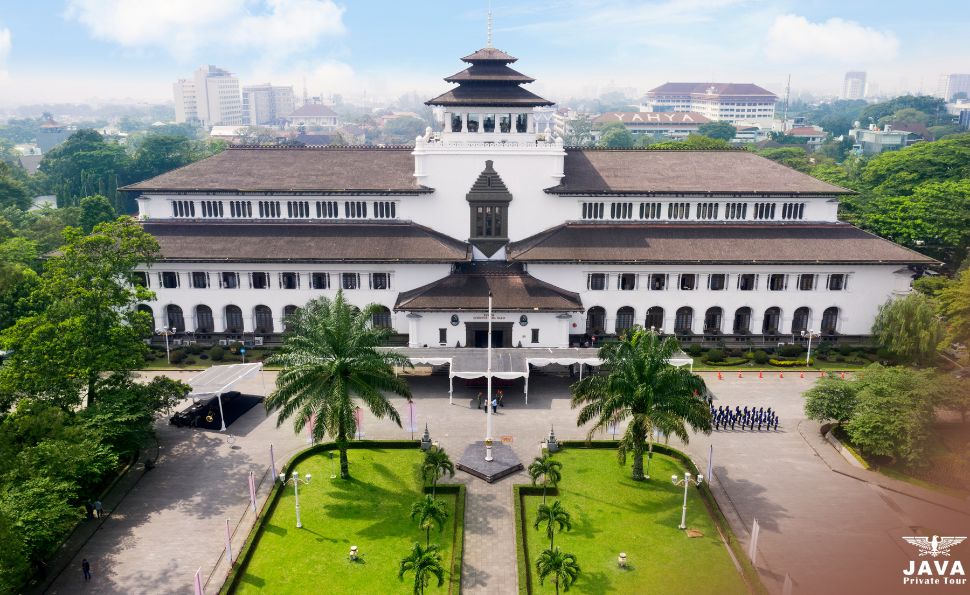
In Bandung and the Priangan Highlands, the story shifts again.
Here, family enterprises were tied to land. Tea, coffee, and quinine plantations reshaped mountain landscapes. Railways were built to move goods. Hill towns emerged to support plantation life.
The legacy is still visible in architecture, road patterns, and agricultural zones.
A heritage walking journey here becomes a lesson in how nature, economy, and power intersect.
When Heritage Becomes Personal
Some of the most meaningful moments during our Java heritage walking tours occur when descendants join the journey.
Guests arrive from Europe, Australia, or elsewhere, sometimes unaware of their family’s connection to Java. Standing in front of an old house, a former warehouse, or a quiet street can change their understanding of identity.
This is not nostalgia.
It is context.
History becomes tangible when it connects to personal memory.

Why Walking Matters
Walking is essential.
It allows time to observe, to ask questions, and to connect dots that are invisible from a vehicle.
Java’s history is still embedded in daily life. People live, work, and socialize inside spaces shaped by past economies.
A Java heritage walking tour reveals this continuity.
A Specialist Approach to Exploring Java
At Java Private Tour, we do not offer generic sightseeing programs.
We specialize in tailored heritage journeys designed for travelers who want depth, accuracy, and human stories.
Each tour is shaped around:
- historical research
- local narratives
- your personal interests and pace
This is not mass tourism.
This is a curated exploration of identity, memory, and place.
A Journey That Continues
This article introduces a broader series exploring Java city by city.
- Pekalongan and industrial batik networks
- Semarang and sugar capitalism
- Cirebon as a cultural trading port
- Bandung and plantation economies
Each chapter adds another layer.
And sometimes, those layers lead back to you.
Start Your Java Heritage Walking Tour
If this journey resonates with you, we invite you to explore it personally.
You can begin by visiting our REQUEST PAGE or simply CLICK THIS LINK to chat with us on WhatsApp.
With Java Private Tour, you are not just visiting Java.
You are understanding it.