javaprivatetour.com – In Bali, time does not simply move forward in a straight line. It cycles, overlaps, and carries spiritual meaning. While many visitors come for beaches and temples, few realize that the rhythm of daily life on the island is guided by an ancient and intricate system known as the Balinese calendar. Understanding the Balinese calendar and how it shapes daily life opens a doorway into the deeper logic of ceremonies, family responsibilities, agriculture, and community harmony.
The Balinese calendar is not just a tool for marking dates. It is a living system that influences when people marry, plant rice, build houses, hold ceremonies, or even cut their hair. To truly understand Bali, you must first understand how time itself is understood here.
Understanding the Dual Calendar System in Bali
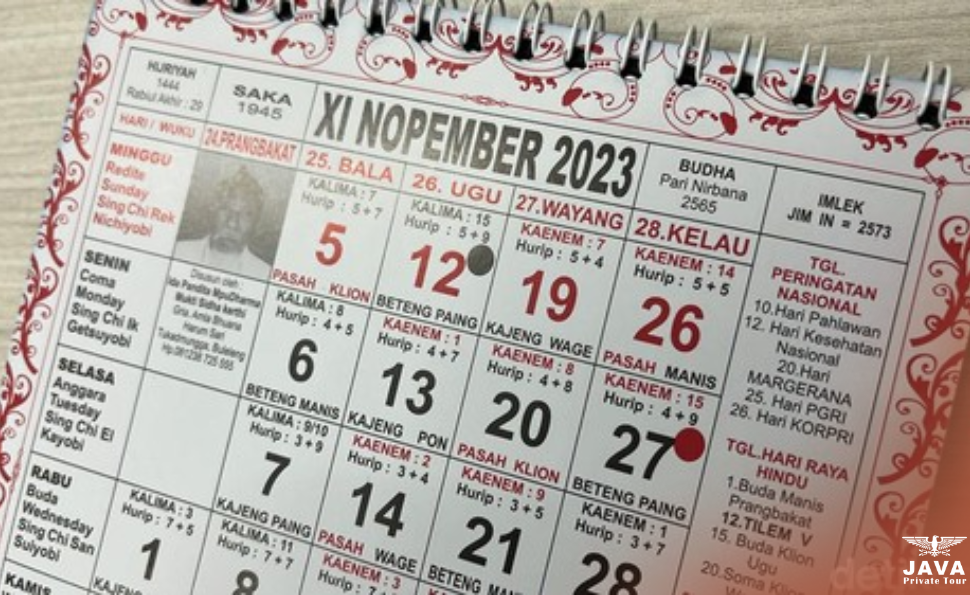
One of the most fascinating aspects of the Balinese calendar is that it actually combines two systems. The first is the Pawukon calendar, a 210 day cycle that repeats continuously. The second is the Saka calendar, a lunar based system that determines major religious festivals.
This dual calendar system in Bali creates layers of meaning. A single day can carry multiple spiritual classifications depending on its position in various overlapping cycles. For locals, this is normal. For visitors, it can feel wonderfully complex.
The Pawukon Calendar and Its 210 Day Cycle
The Pawukon calendar consists of ten concurrent week cycles, each running for a different number of days. These cycles combine to produce specific days considered auspicious or inauspicious. Important ceremonies such as Galungan and Kuningan are determined through this system.
When Galungan arrives, you will see bamboo poles called penjor decorating streets across the island. These are not random decorations. They mark the victory of dharma over adharma, or good over evil, according to the Pawukon cycle.
Families prepare offerings, wear traditional clothing, and visit ancestral temples. Understanding the Balinese calendar helps you see that these celebrations are not tied to fixed global dates. They follow sacred rhythms that have been maintained for generations.
The Saka Calendar and Nyepi
The Saka calendar is lunar based and aligns more closely with the Hindu calendar system found elsewhere in Indonesia and India. One of the most important events determined by the Saka calendar is Nyepi, the Day of Silence.
Nyepi marks the Balinese New Year, but unlike celebrations in many parts of the world, it is observed with complete stillness. The entire island pauses. No flights arrive or depart. Streets are empty. Lights are dimmed. Even tourists are asked to remain inside their accommodation.
This day is about reflection, cleansing, and spiritual reset. It demonstrates clearly how the Balinese calendar shapes daily life at every level, from households to international airports.
How the Balinese Calendar Influences Daily Activities
Understanding the Balinese calendar and how it shapes daily life goes beyond major festivals. It influences small, personal decisions as well. Before starting construction on a new house, families consult a priest to determine the most auspicious day. Before holding a wedding ceremony, the date is carefully selected based on compatibility and cosmic balance.
Even agricultural cycles follow sacred timing. Rice planting and harvesting are coordinated with temple rituals and water blessings. This ensures not only productivity but also spiritual harmony.
Birthdays and Life Cycle Ceremonies
In Bali, birthdays are not celebrated once a year according to the Gregorian calendar. Instead, they are observed every 210 days according to the Pawukon cycle. This means a person may celebrate multiple birthdays within a short span of global years.
Life cycle ceremonies such as tooth filing, marriage, and cremation are also scheduled based on calendar calculations. These events are not chosen for convenience. They are aligned with spiritual readiness and cosmic alignment.
Market Days and Community Rhythms
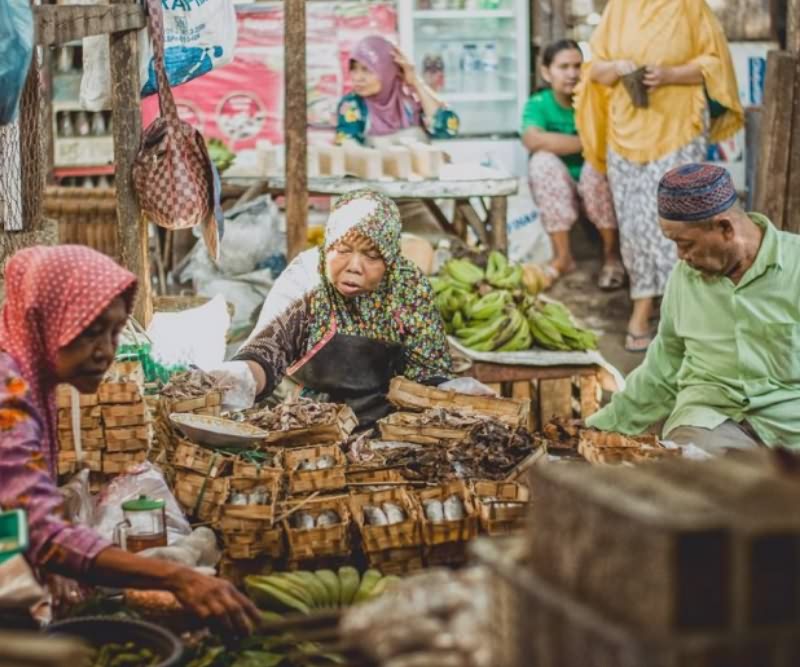
Traditional markets in Bali often follow the five day cycle within the Pawukon system. Certain villages hold larger market days depending on their specific calendar position. This creates a dynamic flow of economic and social interaction across regions.
For travelers who understand this rhythm, visiting on the right day can mean experiencing a vibrant local gathering rather than a quiet marketplace.
Experiencing Bali Through Its Sacred Timing
When you travel through Bali with awareness of its calendar, everything gains new meaning. Decorations appear not as random ornaments but as markers of sacred days. Processions become understandable rather than surprising. You begin to see patterns in what once seemed spontaneous.
Understanding the Balinese calendar and how it shapes daily life transforms your travel experience. Instead of asking why a ceremony is happening, you start anticipating it. Instead of feeling like an outsider, you begin to appreciate the structure guiding the island.
This is why meaningful travel requires context. Java Private Tour is not a generalist, but a specialist. We focus on helping travelers explore Indonesia with cultural depth and insight. Our experiences are designed so that you do not just visit Bali, but truly understand it.
The Balinese calendar is more than an ancient system. It is a reminder that time can be sacred. It can guide community cooperation, personal milestones, and agricultural balance. It can connect past generations with the present. And when you witness it in action, you see that Bali’s beauty is not only visual. It is rhythmic and spiritual.
So, if you’re ready to explore the wonders of The Balinese Calendar and How It Shapes Daily Life, head over to our REQUEST PAGE and let’s start planning your adventure. Or you can simply CLICK THIS LINK to chat with us on WhatsApp. With Java Private Tour, you’re not just getting a guide; you’re gaining a friend who will ensure your trip is nothing short of extraordinary. See you in Java!