The Chevalier Clan of Magelang: A French Business Empire in Colonial Java
javaprivatetour.com – Magelang, today known as a quiet highland town near Borobudur, once stood as a promising frontier for foreign ambition. In the late 19th century, long before mass tourism or modern infrastructure, this city attracted investors, traders, and dreamers from across Europe and Asia. Among them was a French family whose story blended success, tragedy, and resilience: the Chevalier clan of Magelang.
Magelang as a Land of Opportunity After the Java War
Following the end of the Java War in 1830, the colonial administration opened vast economic opportunities across Central Java. As the capital of the Kedu Residency, Magelang became a magnet for foreign capital. Europeans, Chinese merchants, Japanese traders, and other expatriates competed side by side, transforming the town into a surprisingly cosmopolitan enclave.
For foreign entrepreneurs, Magelang offered something rare: fertile land, clean water, strategic access to Central Java, and a growing European community with refined tastes. It was in this environment that the Chevalier family arrived from France, quietly laying the foundations of what would become one of the most intriguing business empires in colonial Java.

The Rise of the Chevalier Clan in Magelang
The story of the Chevalier clan begins with the marriage of Victor Joseph Chevalier and Louise Maria O’Herne. From this union came three children: Jeanne, Martha, and Robert Chevalier. While their family life unfolded in Magelang, their ambitions extended far beyond domestic comfort.
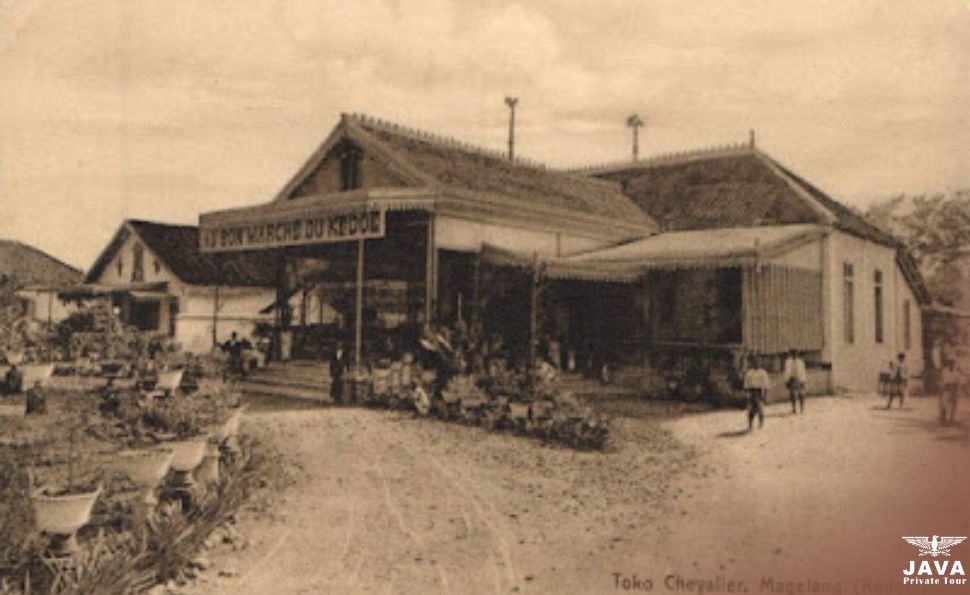
One of their earliest ventures was the establishment of Au Bon Marche, a restaurant bearing the same name as the famous Parisian department store founded in 1850. In the Dutch East Indies, however, “Au Bon Marche” took on a new meaning, becoming synonymous with refined European dining.
In Magelang, the Chevalier-operated Au Bon Marche served as a social hub for European residents, colonial officials, and wealthy locals. Dining here was not merely about food; it was about status, identity, and belonging to a privileged world far removed from Europe yet deeply nostalgic for it.
Chevalier O’Herne: Ice, Water, and Modern Luxury
The true strength of the Chevalier clan Magelang lay in diversification. Beyond hospitality, the family established a highly successful ice and mineral water factory known as Chevalier O’Herne. The name itself symbolized unity, blending the surnames of husband and wife.
Using water from a nearby tangsileideng irrigation channel, the factory produced ice blocks and bottled mineral water under the brand Eifelwater, proudly displaying the Eiffel Tower as its logo. This symbol reflected the family’s deep pride in their French identity, even while operating in colonial Java.
At the time, bottled mineral water—often referred to as “Dutch water” or Aer Belanda—was a luxury product. Consumed primarily by European elites and local aristocrats, it represented modernity, hygiene, and social distinction. The existence of such a factory in Magelang spoke volumes about the city’s prosperity.
Old postcards even suggest that the Chevaliers imported carbonated mineral water such as Apollinaris from Germany, further reinforcing their position within an elite transnational trade network.
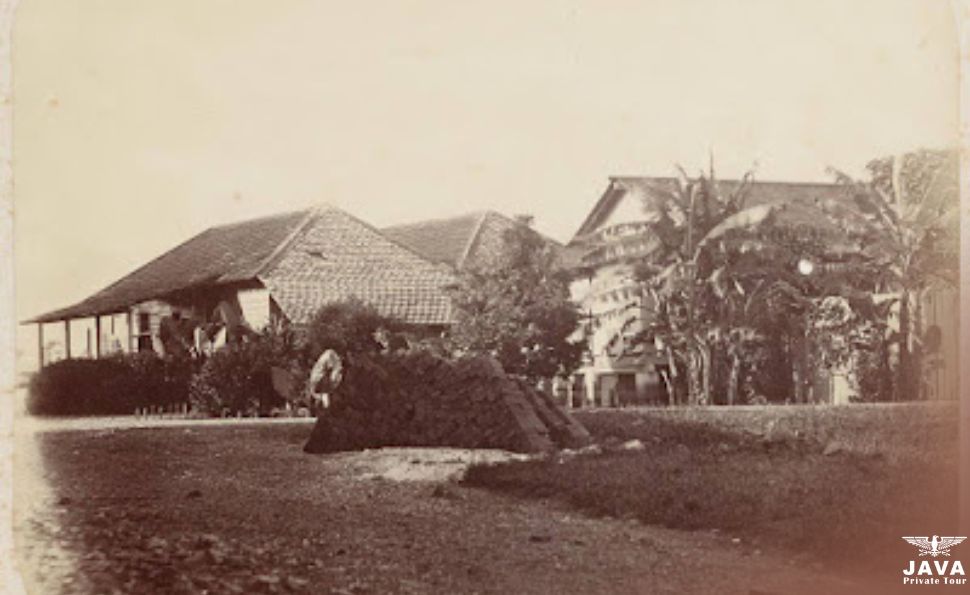
Disaster and Resilience in a Colonial Business Empire
Like many colonial enterprises, the Chevalier empire faced hardship. In January 1911, a tragic accident struck when part of the ice factory collapsed, killing one worker and injuring two others. The victims were local laborers, a reminder of the human cost often hidden behind colonial industry.
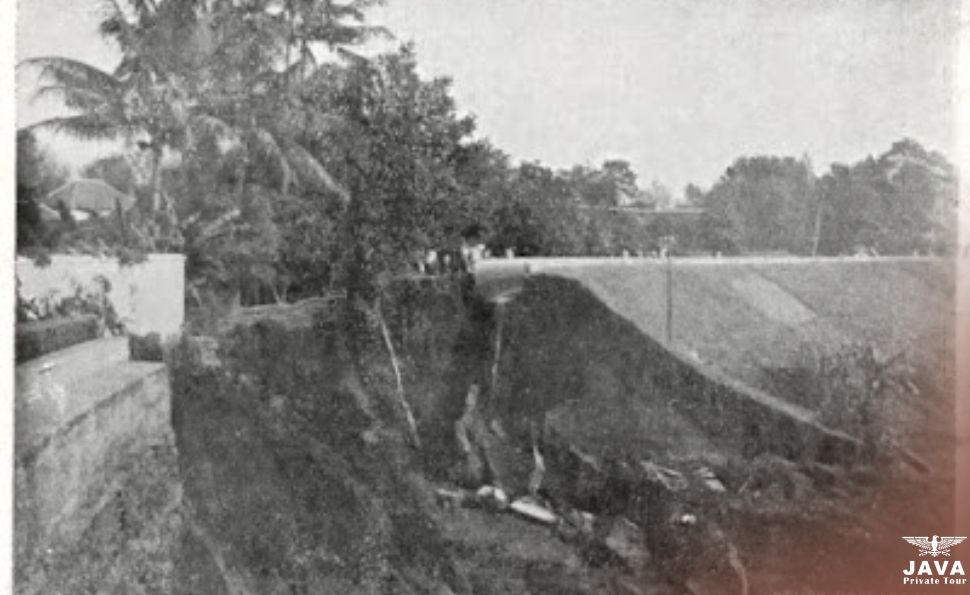
Another catastrophe followed in September 1915, when a landslide caused by structural failure in the irrigation system disrupted the factory’s operations. For days, Magelang echoed with the sounds of collapsing earth and rushing water.
Yet the Chevaliers endured. Their ability to recover from disaster underscored not only financial resilience but also the strategic importance of their business within the colonial economy.
From Magelang to the Battlefields of Europe
The outbreak of World War I reached even the distant Dutch East Indies. In 1916, Robert Chevalier, the only son of the family, was summoned by the French Consulate in Batavia. Though raised in Java, his loyalty to France called him back to Europe.
Robert joined the Franco-British expeditionary forces in Salonika, Greece, under General Franchet d’Espèrey. From tropical Magelang to the brutal trenches of Europe, his journey reflected the global reach of colonial identity and obligation.
Against the odds, Robert survived the war and returned to Magelang, resuming leadership of the family business. His survival became a quiet legend among locals, reinforcing the image of the Chevaliers as a family shaped by both commerce and conflict.
The Twilight of the Chevalier Legacy
Victor Joseph Chevalier passed away in 1920, just two years after the Treaty of Versailles ended World War I. Louise Maria O’Herne survived the Japanese occupation of Java and later returned to Europe, where she died in 1948.
The fate of Robert Chevalier and his sisters remains uncertain. Like many Europeans during World War II, they may have been interned by Japanese forces or forced to abandon their lives in Java entirely.
After Indonesian independence, the Chevalier O’Herne factory changed hands multiple times. It became an ice block factory, later a peanut and bread factory, then a garage, warehouse, and eventually a private residence. Yet the words “PABRIK ES KEBONPALA” still remain etched on the building’s façade, a silent witness to its layered past.

Why the Chevalier Story Matters Today
The story of the Chevalier clan Magelang is more than colonial nostalgia. It is a lens through which we can understand migration, identity, resilience, and the entangled histories of Europe and Java.
Walking through Magelang today, few travelers realize that beneath its calm streets lies a global story of ambition, war, and survival. These hidden layers are what make Java endlessly fascinating.
Explore Java’s Hidden Histories with Java Private Tour
At Java Private Tour, we believe travel should go beyond sightseeing. We are not generalists offering rushed itineraries. We specialize in deep, meaningful journeys that connect you with Java’s living history.
Our professional English-speaking guides, flexible schedules, and private transportation allow you to explore places like Magelang through stories rarely found in guidebooks. Recommended by embassies and trusted by first-time visitors, we ensure comfort, insight, and authenticity in every journey.
So, if you’re ready to explore the hidden stories of colonial Java and beyond, head over to our REQUEST PAGE and let’s start planning your adventure. Or you can simply CLICK THIS LINK to chat with us on WhatsApp.
With Java Private Tour, you’re not just getting a guide. You’re gaining a friend who will ensure your journey through Java is thoughtful, immersive, and unforgettable. See you in Java.